What Is MS Angle and Where Is It Used?
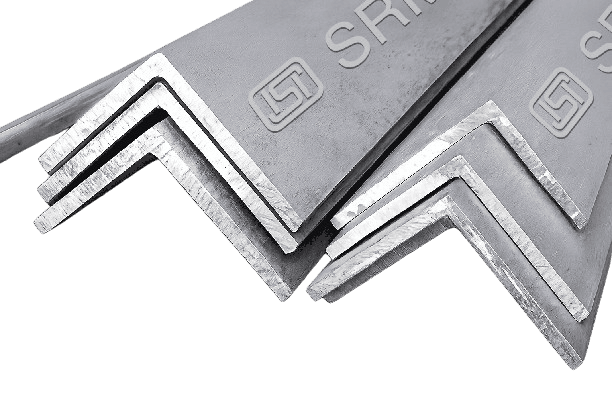
MS angle, short for mild steel angle, is one of the most widely used structural steel sections in India. It is an L-shaped cross-section formed by bending a single strip of mild steel at a 90-degree angle. The two legs of the L can be of equal length (equal angle) or of different lengths (unequal angle), though equal angles dominate the Indian market by a significant margin.
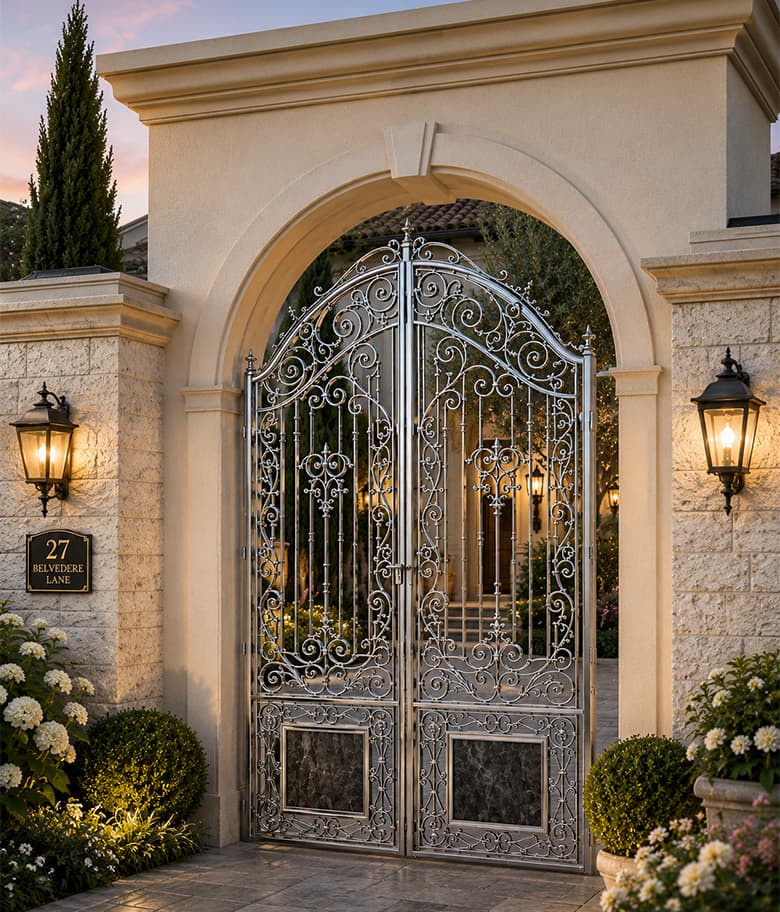
Walk through any construction site, fabrication workshop, or industrial facility and you will find MS angles at work. They form the skeleton of storage racks and shelving systems, serve as the primary framework for industrial sheds, mezzanine floors, and roof trusses, and are used to fabricate window frames, door frames, staircase railings, and balcony grills.
Beyond construction, MS angles find applications in transmission towers, railway wagon underframes, agricultural equipment, and heavy machinery guards. Their ability to be welded, bolted, riveted, or bent without cracking makes them one of the most forgiving sections to work with.
MS Angle Sizes and Dimensions You Should Know
MS angles in India are manufactured in a range of standard sizes governed by IS 808 and produced to the material specification of IS 2062:2011. The most common sizes start at 20x20mm and go up to 75x75mm and beyond. Within this range, the sizes you will encounter most frequently are 25x25mm, 30x30mm, 35x35mm, 40x40mm, 50x50mm, 65x65mm, and 75x75mm, each in multiple thickness options from 3mm to 8mm.
The thickness of the angle is just as important as the leg size. A 50x50x5mm angle behaves very differently from a 50x50x6mm angle under load. For light-duty applications like shelving, window grills, or furniture frames, 25x25x3mm or 30x30x3mm angles are usually sufficient. For structural framing, you would typically start at 50x50x5mm or 50x50x6mm.
Sizing Rule of Thumb
For spans under 3 metres with light loads, 40x40x4mm is a reliable starting point. For spans over 3 metres or moderate loads, move to 50x50x5mm or higher. Always confirm with your structural engineer for load-critical applications.
Standard lengths for MS angles in India are 6 metres and 12 metres, with 6-metre lengths being far more common. When placing an order, always specify whether you need equal or unequal angles, the exact leg dimensions, thickness, and the desired length.
Understanding the MS Angle Weight Chart
The weight of an MS angle is determined by its cross-sectional area multiplied by the density of mild steel (approximately 7,850 kg per cubic metre). Both the leg size and the thickness directly influence the weight per metre. Since MS angles are often priced per kilogram, the weight per metre directly affects your per-piece cost.
A 40x40x4mm MS angle weighs approximately 2.41 kg per metre. A 50x50x6mm MS angle weighs approximately 4.47 kg per metre — nearly double. Many buyers make the mistake of selecting a heavier section than necessary; the right approach is to match the section to the actual load requirement.
Quick Weight Reference
25x25x3mm = ~1.11 kg/m | 30x30x3mm = ~1.36 kg/m | 40x40x4mm = ~2.41 kg/m | 50x50x5mm = ~3.77 kg/m | 50x50x6mm = ~4.47 kg/m | 65x65x6mm = ~5.87 kg/m | 75x75x6mm = ~6.82 kg/m.
What Affects MS Angle Price per Kg in India?
The price of MS angle per kg in India is not a fixed number. The single largest driver is the cost of raw materials, primarily iron ore, coking coal, and scrap steel. Indian steel prices also respond to government policies such as import duties, export restrictions, and anti-dumping measures.
Beyond raw material costs, the specific size and grade of the angle influence pricing. IS 2062:2011 E250 is the standard structural grade, but if your application demands E350 or E450 for higher yield strength, expect a premium of 5 to 15 percent. Order quantity plays a significant role too — a buyer ordering 5 tonnes will almost always get a better per-kg rate than someone buying 500 kg.
Pricing Tip
Always ask for the price inclusive of GST and transportation. Many suppliers quote an ex-factory rate that looks attractive but becomes significantly higher once you add 18% GST and freight. Get the landed cost at your site before comparing quotes.
Manufacturer, Dealer, or Wholesaler? Who Should You Buy From?
Buying directly from a primary steel producer is the most cost-effective option if your order volume justifies it. The advantages include better pricing, consistent quality backed by in-house testing, and mill test certificates for every lot. The trade-off is that most manufacturers have minimum order quantities — typically 5 to 10 tonnes.
Dealers and stockists are the right choice for smaller quantities or urgent requirements. They maintain ready inventory of popular sizes and can deliver within a day or two in most urban markets. Just verify that the dealer is sourcing from a reputable manufacturer.
Wholesalers occupy the middle ground. If your requirement is in the range of 1 to 5 tonnes, a wholesaler can often offer a better rate than a dealer while still providing faster delivery than a manufacturer.
Finding a Reliable MS Angle Supplier Across India
Reliability in steel supply means three things: consistent product quality, on-time delivery, and transparent pricing. Start by checking whether the supplier is an authorised dealer or stockist for a recognised manufacturer.
Eastern India has a strong concentration of steel manufacturing capacity. Kolkata serves as one of the country's largest steel trading hubs. Buyers in Jharkhand benefit from proximity to Jamshedpur and Bokaro. Bihar's growing construction sector is served by suppliers with warehousing in Patna and Muzaffarpur, and Odisha has a well-developed supply network around Bhubaneswar, Cuttack, and Rourkela.
When evaluating a supplier, look beyond the quoted price. Request sample test certificates and check whether the chemical composition and mechanical properties meet IS 2062:2011 requirements.
About SRMB RealEdge
SRMB Srijan Private Limited is a primary steel producer headquartered in Kolkata with its manufacturing facility in Durgapur, West Bengal. Unlike secondary re-rollers who depend on purchased billets, SRMB operates an integrated production process — from melting to continuous casting to rolling — ensuring complete control over quality.
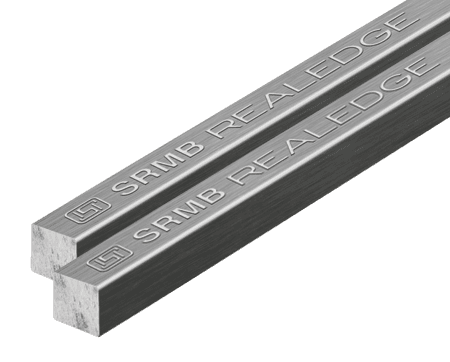
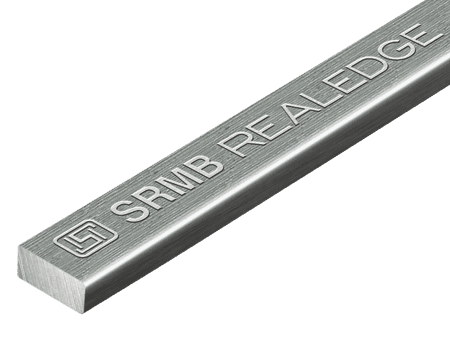
SRMB RealEdge focuses on structural steel sections including MS angles, MS flats, MS square bars, Z Angles, and Gate Channels. Every RealEdge product is manufactured to IS 2062:2011 E250 grade specification and comes with a mill test certificate as standard.
When the source of your steel is a primary producer with its own melting and rolling facility, you eliminate the uncertainty that comes with multi-layered supply chains. That is the core promise of SRMB RealEdge.
Need MS Angle You Can Actually Rely On?
SRMB RealEdge manufactures IS 2062:2011 grade MS angles at its Durgapur plant with full traceability from melt to dispatch. Get factory-direct pricing and mill test certificates with every order.